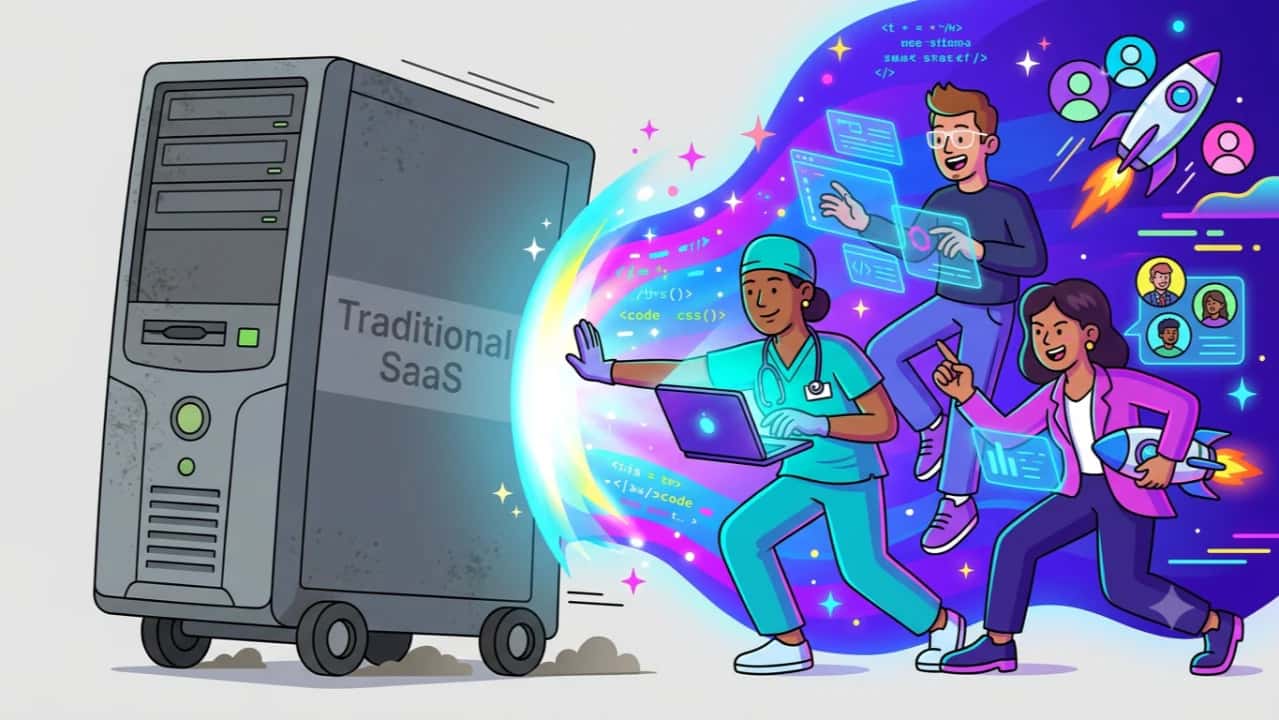
The excitement is justified. In major hospitals, a specific subset of tech-oriented clinicians particularly those from the “AI generation” who are comfortable experimenting with modern tools are building real-looking prototypes and useful applications: triage helpers, workflow assistants, and diagnostic aids. These are not slide decks or wireframes. For this growing cohort of tech-savvy doctors, the barrier to creation has collapsed, and their enthusiasm is infectious.
To be clear, this is not universal. Most old-school physicians are not building software. Their focus remains patient care, clinical judgment, and reliable workflows not prompt engineering or app development. But the shift is real: a credible builder class is emerging inside the clinical domain, and they are surfacing valuable workflow innovations faster than traditional product cycles ever could.
Yet operationalizing a demo remains deeply complex. This is the critical observation shaping how regulated industries healthcare, finance, and similar sectors navigate the AI wave, and what it means for SaaS.

The Limits of “Next-Gen Mockups”
AI tools have produced a new category of output that creates an illusion of readiness. These prototypes typically share three shortcomings:
- They are beyond slideware: They deliver real-looking, interactive UIs with functional elements not static PowerPoint mockups. That is a genuine leap, but it also creates a dangerous sense of completeness.
- They resemble MVPs but are not: Best described as “next-gen Claude mockups,” they look dramatically better and feel more real than traditional demos. Yet they lack reliability, monitoring, error handling, lifecycle management, and supportability the properties that make an MVP actually deployable.
- They are disconnected from the regulated value base: Authentication layers, identity management (SSO, RBAC), integration with core systems (EHR, CRM, ERP), data governance (lineage, consent, retention), compliance, audit trails, and safety guardrails are entirely absent. The prototypes exist in a vacuum, untethered from the IT backbone that makes software safe and compliant.
These tech-forward clinicians are producing impressive work at remarkable speed. But when integration into a real IT platform begins, the engineering work starts in earnest. The beautiful AI-generated UI often functions as the next-generation slide mockup a strong first step, not a finished product.
Pressure on SaaS and the Enduring Need for Discipline
This shift puts enormous pressure on traditional SaaS vendors. Users now far more tech-literate are asking pointed questions: Why is it taking so long for our EHR or CRM to update this? Why can't we integrate that tool today? Expectations shaped by consumer AI speed clash with enterprise realities, driving demands for faster coding, deeper integration, and more frequent enhancements.
Software is going through a dramatic change. The monolithic, vendor-dictated release cycle is buckling under the weight of what AI makes possible at the edge. But regulated platforms cannot simply “move fast and break things.” Winning still requires the same discipline of careful deployments, rigorous validation, compliance-first architecture, and risk management. Bypassing governance because a prototype looks compelling is not innovation it is risk.
The Bridge: From Prototypes to Governed Delivery
The real opportunity lies in bridge platforms that maintain regulatory foresight while allowing innovation and speed. These platforms do not force organizations to choose between agility and compliance. They make both possible simultaneously.
This is the space addressed by our purpose-built solutions:
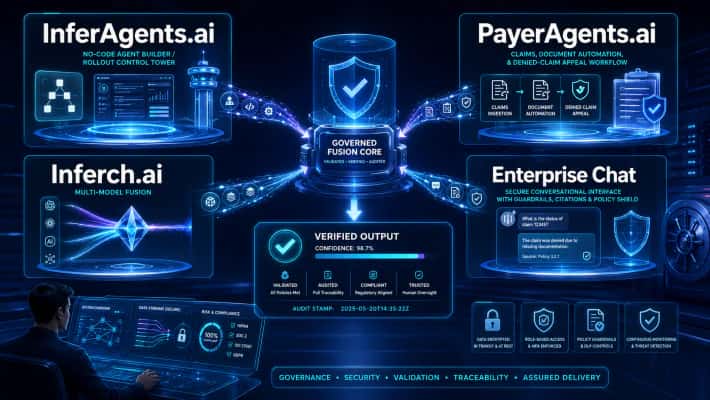
- Inferagents.ai - A no-code agentic platform for IT to deploy and manage agent rollouts in regulated environments. It provides the governed layer (authentication, integration, audit trails, versioning, environment promotion) that turns clinician prototypes into production applications rather than demo debt.
- Payeragents.ai - Focused on automating denied claim appeal generation, transforming a labor-intensive, error-prone process into an AI-driven workflow that operates within compliance guardrails. This represents operationalized AI solving a real revenue cycle problem.
- Inferch.ai - For critical queries where one model is not enough, Inferch provides an assured query layer via a fusion architecture across multiple models. This ensures high-stakes decisions are grounded in cross-validated outputs rather than any single model's response.
- Enterprise Chat - is a secure, governed conversational interface designed for enterprise teams in regulated environments, such as healthcare or telecom. It enables employees to query internal knowledge bases, surface insights, and complete workflows using natural language while enforcing strict access controls (SSO/RBAC), policy guardrails, citation traceability, audit logging, and data privacy protections.
SaaS Is Not Dying - But It Is Being Fundamentally Reshaped
Software is going through a dramatic change. The old model of sealed SaaS products with rigid roadmaps is under pressure from AI-empowered users and rapidly evolving expectations. In regulated industries, the future belongs to bridge platforms that maintain regulatory foresight while allowing innovation and speed platforms that are composable, integratable, auditable, and safe.
The winners will be those who bridge both worlds: harnessing the explosion of AI-powered creation from tech-savvy domain experts while preserving the rigor that production in regulated environments requires. Prototyping has become easy. Production, integration, and governance remain where real value and trust are earned.
The future isn't a choice between innovation and compliance. It's building the bridge that makes both possible at the same time.